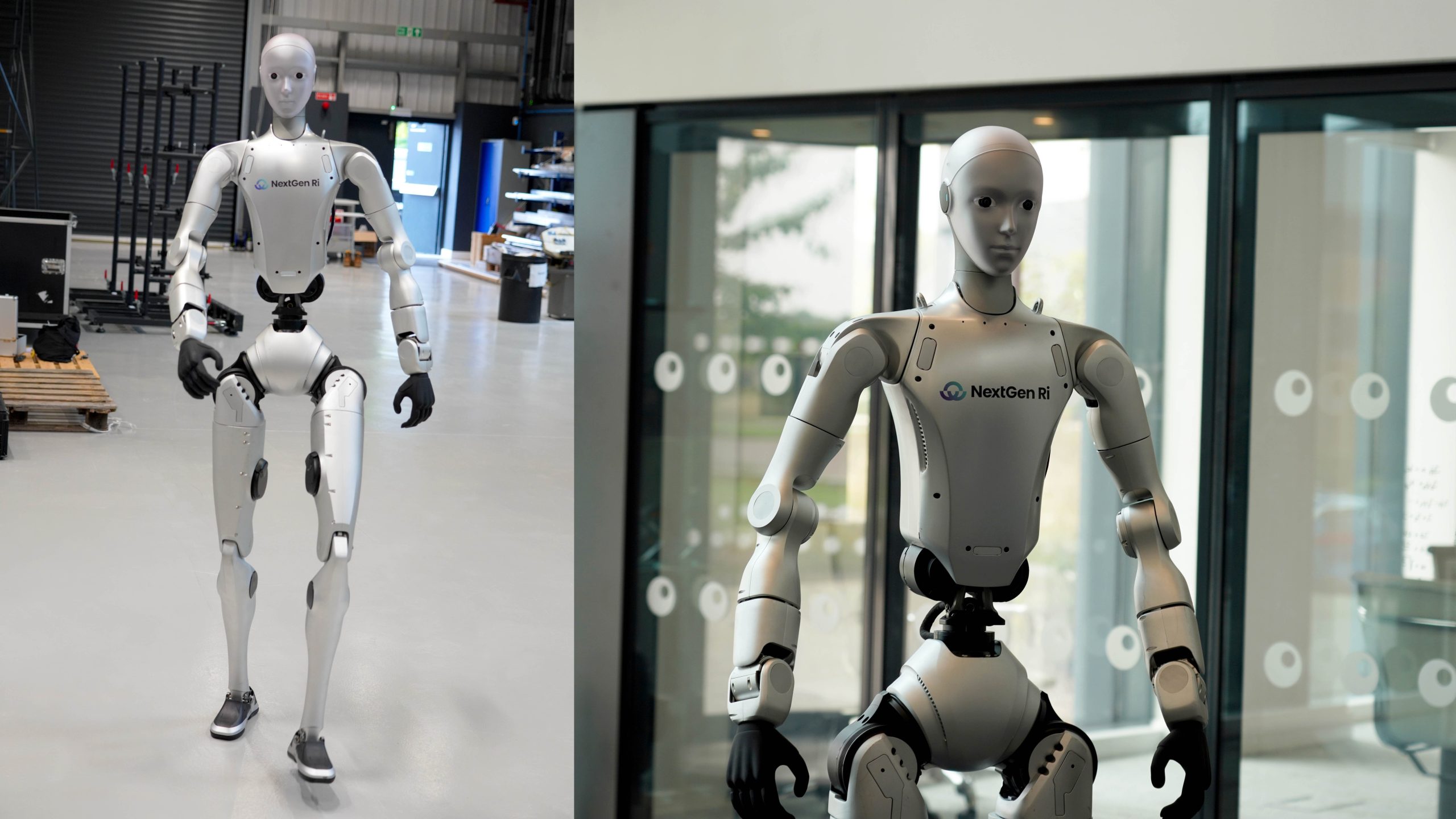
If you’ve arrived here because you’ve seen a certain humanoid robot popping up on social media, you’ve come to the right place. His name is Zomet. And he’s only just getting started.
We knew Zomet might turn a few heads. What we didn’t expect was quite how quickly he would capture people’s attention. A short video of him taking some of his first steps outside our Cramlington headquarters found its way onto social media, and suddenly, a lot of people wanted to know more. So, we thought we’d introduce him properly.
So, who – or what – is Zomet?
Zomet is a Unitree H2 humanoid, an extraordinarily advanced piece of robotics capable of moving and interacting with the physical world in ways that would have seemed like science fiction not very long ago.
The technology that makes that possible is impressive in its own right. But we haven’t brought Zomet to Cramlington simply to demonstrate what already exists. For us, Zomet is a blank canvas. We want to find out what happens when you put a platform like this into the hands of our engineers and start building intelligence around it.
What can we teach him to see, understand and do? What happens when we combine humanoid robotics with our own sensors, electronics, edge processing, software, data and artificial intelligence? How far can we develop his awareness of the world around him, his physical capabilities and his ability to interact intelligently with real environments?
And ultimately, could machines like Zomet perform genuinely useful roles in places that are difficult, dangerous or simply impossible for people?
An engineering playground
Transmission Dynamics has always been a home for curious engineers. From our headquarters in Cramlington, we work across defence, rail, power generation and other demanding engineering environments, bringing together mechanical engineering, electronics, advanced sensing, data, machine learning and AI to solve difficult real-world problems. Normally, you’ll find those technologies embedded in machinery, infrastructure and industrial assets around the world.
Now we’ve got a humanoid robot walking around the building. You can probably understand why our engineers are excited. Zomet gives us an entirely new platform on which to experiment, learn, develop ideas and push boundaries, quite possibly in directions we haven’t even thought of yet.
Where could this take us?
We don’t have the answer yet. That’s rather the point.
For years, we’ve used sensors, data and increasingly AI to understand what is happening inside complex machinery and infrastructure. Over time, that has taken us far beyond simply measuring what machines are doing.
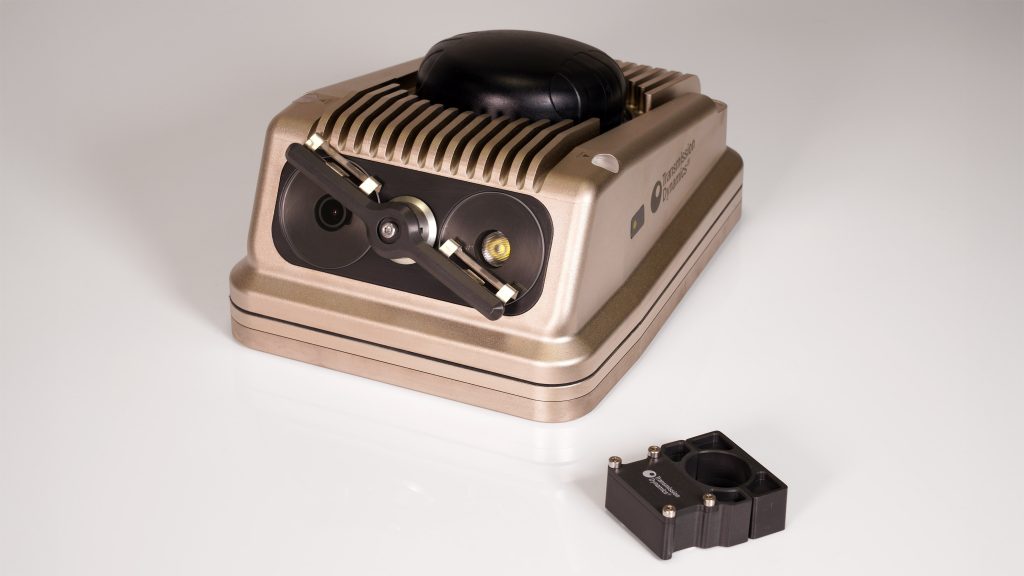
Our PANDAS-V® technology is perhaps the best example.
Starting in 2008, we placed a simple sensor on a train to measure acceleration. Over 20 years, PANDAS-V® has evolved. In engineering terms, our team designed new software, added cameras, sensors, AI chips and other cutting-edge technology. But we did something else.
PANDAS-V® evolved to be a device that thinks, looks, listens and senses. It sits aloft a train working tirelessly, reporting immediately dangers that it identifies. This helps rail operators worldwide to prevent accidents and fix overhead lines before catastrophic failure.
Now Zomet presents us with a different kind of opportunity.
What happens when we take everything we’ve learned about giving machines senses and intelligence, and give that intelligence arms and legs?
What can we teach him to see, understand and do? What happens when we bring humanoid robotics together with our own sensors, electronics, edge processing, software, data and artificial intelligence? How far can we develop his physical capabilities, his awareness of the world around him and his ability to interact intelligently with it? And ultimately, where could machines like Zomet perform genuinely useful roles in environments that are difficult, dangerous or simply impossible for people?
Artificial intelligence and robotics are advancing at an extraordinary pace. Nobody can say with certainty where these technologies will ultimately take us, but one thing is clear: standing on the sidelines isn’t our philosophy.
We intend to understand them, challenge them, develop them and help shape how they are used.
There will, of course, be a strong emphasis on safety, responsibility and genuine practical value. But there will also be ambition. We are not interested simply in watching the future arrive. We want to have a hand in building it.
Follow Zomet’s journey
If Zomet has caught your attention, stick around. We’ll be sharing his progress across Transmission Dynamics’ social media channels as our engineers’ experiment, learn and find out just how far we can take this.
And if you’re local to Cramlington, you might get a chance to see some of that engineering a little closer to home.
Our Friday lunchtime Slice of Engineering events open our doors to young people, students and the next generation of curious engineers in our community. Come along, meet the people behind the engineering, see what we’re working on – and from now on, you never quite know who else you might meet.